Cracking the Pain Points of the Modern Battlefield:A New Paradigm for National Defense Applications of Industrial-Grade UAV Components
If you are a scout who has been performing missions on the border for years, you must have experienced this anxiety: a drone that took hours to take off loses signal as soon as it flies into the target area due to enemy electronic jamming; or after painstakingly taking hundreds of gigabytes of reconnaissance photos, only a few blurry thumbnails are transmitted back due to insufficient bandwidth, and by the time you get the complete data, the target has long since fled.
If you are a grassroots equipment support officer, you must also have had these headaches: drones on the plateau suddenly lose power due to low temperatures mid-flight; aerial cameras that work perfectly fine on normal days can barely hover on windy days; when you need to deliver urgently needed parts to the front line, the convoy is blocked by enemy fire, and you can only watch helplessly as the equipment “breaks down”.
These are not hypothetical scenarios in exercises; they are the most real pain points of drone applications in the national defense and military field today. Many people think that the bottleneck of drones lies in the technology of the whole aircraft, but in fact, what really holds us back are often those inconspicuous components — a tiny transmission module, a battery adapted to high altitudes, an anti-interference communication interface, can directly determine the success or failure of a mission.
Today, I will talk to you in detail about how we help frontline comrades solve these headaches through customized UAV components, turning those “impossible” missions into “routine tasks”.
I. The Four “Chains” Trapping Drones: Have You Also Fallen Victim to Them?
After communicating with dozens of frontline troops, we have summarized the four most common pain points of military drones today, which almost every practitioner has encountered to some extent:
1. “Computing Power Dependency Syndrome”: Unable to Operate Without Rear Support
Many traditional drones are nothing more than “flying cameras”. All image processing, target recognition, and 3D modeling have to be done by large rear computing centers. This means that as soon as communication is cut off, the drone becomes blind — no matter how much it has filmed, it cannot process or transmit the data back, and the mission is completely ruined.
In a border exercise once, a reconnaissance drone from a certain unit penetrated deep into the enemy’s rear, but the communication link was jammed and cut off. Although the drone flew back on its own, the hundreds of gigabytes of data it captured could only be exported and analyzed slowly after returning because it had no on-board processing capability. By the time they calculated the target coordinates, a full 45 minutes had passed, and the combat opportunity had long been missed.
2. The Perpetually Congested “Information Superhighway”
How precious is battlefield bandwidth? Probably more than you can imagine. A single drone can generate several gigabytes of raw image data per second, and even the best communication links cannot handle such a huge amount of data. Most of the time, to transmit data back, the image quality has to be reduced to the minimum, resulting in blurry footage that cannot even distinguish whether a target is a tank or a truck.
What’s worse, in a strong electromagnetic interference environment, even this pitiful bandwidth cannot be guaranteed. Many times, you watch the screen stutter frame by frame, jumping with anxiety, but there is nothing you can do.
3. “Efficiency Bottleneck”: Fighting Alone
The capability of a single aircraft is ultimately limited. For example, patrolling a 100-kilometer border requires 6 takeoffs and landings and more than 8 hours for a single drone. By the time it finishes, the situation ahead has already changed. Moreover, if this aircraft malfunctions, the entire mission is interrupted. Many troops have tried flying multiple drones together, but the problem arises: these aircraft cannot coordinate with each other at all. Each flies its own route, generates its own data, and finally, manual work is required to piece together these scattered data. Instead of improving efficiency, it increases the workload.
4. “Environmental Vulnerability”: Unable to Withstand Harsh Conditions
The battlefield environment is far harsher than the training ground. On plateaus, thin air cuts engine power in half, and low temperatures cause batteries to lose power abruptly. A drone that can fly for 1 hour on normal days can only fly for 20 minutes on the plateau; coastal salt spray can corrode ordinary electronic components in just a few days; sandstorms and strong winds also make drones unable to fly in slightly bad weather.
A comrade from a plateau unit once told me that their drones dare not be taken out in winter at all — the battery reports an error as soon as it is turned on, and they have to warm it indoors for a long time before it can fly, making it impossible to respond to emergencies.
Drones upgraded with specialized components can now stably perform missions in plateau environments
II. Small Components Solve Big Problems: Our Breakthrough Approach
When many people encounter these problems, their first reaction is to replace them with more expensive whole aircraft. But in fact, most of the time, you only need to upgrade a few key components to completely transform your existing drones. Targeting these four major pain points, we have created a complete set of military-grade UAV component solutions that can directly upgrade combat effectiveness without requiring you to replace the aircraft.
1.Install Computing Power on the Aircraft: Let Drones “Think” for Themselves
Our first solution is to add embedded AI computing power modules to drones. This palm-sized component can provide up to 275 TOPS of computing power, equivalent to moving a small data center into the sky.
With this component, drones can process image data in real time during flight, perform 3D modeling and target recognition, without having to transmit raw data back to the rear. It will automatically extract the most important information — such as target coordinates and types — and transmit back less than 1% of the key data, while the remaining raw data is stored locally.
What does this mean? Even if communication is completely cut off, the drone can complete the mission on its own, identify targets, and record coordinates. When it flies back, you can get the results directly without spending hours processing data. Moreover, because the amount of data transmitted back is extremely small, key intelligence can be transmitted back even in a strong interference environment, and there will be no more “data congestion”.
2.Anti-Interference Communication: Ensure the Signal Never“Drops”
To address the problem of electromagnetic interference, we have two sets of solutions:
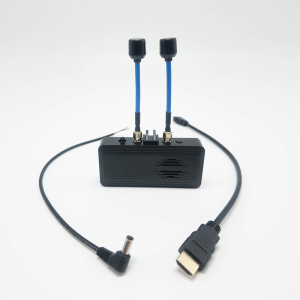
One is an encrypted high-speed data transmission module. This module can reduce data transmission latency to less than 10 milliseconds, and comes with built-in encryption and anti-interference algorithms. It can ensure stable data transmission even in enemy electronic warfare environments.A unit in the Central Theater Command used this transmission module to realize the direct connection between drones and artillery fire control systems — when the drone discovers a target, the coordinates are transmitted to the artillery system in seconds, and firing can be done directly without manual conversion.
The other is the fiber optic communication component that has become popular on the Russia-Ukraine battlefield. Many people may think fiber optics is an old technology, but on the battlefield, it is simply an antiinterference artifact. We have added a small fiber optic spooling module to drones.As the drone flies, it trails an almost invisible thin fiber optic cable, and all control signals and data are transmitted through this cable. The enemy cannot interfere with it at all — they can jam wireless signals, but not wired ones.
A customer once used this component to fly 10 kilometers in the enemy’s strong electronic interference environment, with smooth 4K footage throughout and no stuttering at all, perfectly completing the reconnaissance mission. Moreover, this component is very cheap, costing only a few thousand yuan per set, much cheaper than replacing an anti-interference wireless communication system.
3.Cluster Coordination Components: Turn Multiple Aircraft into“One Brain”
To solve the problem of low single-aircraft efficiency, we have developed cluster coordination communication components. This small module allows multiple drones to automatically form a network, share positions and data, assign tasks, and plan routes without manual intervention.
For example, if you need to map an area of 1,500 square kilometers, it used to take 5 days for a single aircraft. Now, if you deploy 30 drones, they will automatically divide the area among themselves. Each flies its own sector, data is synchronized in real time, and the task can be completed in one day, directly increasing efficiency by 5 times. Moreover, even if several aircraft are shot down, the remaining ones will automatically take over their tasks, and the mission will never be interrupted.
What’s more impressive is that this component is universal. Whether you have fixed-wing or multi-rotor aircraft, no matter what brand they are, as long as you install this module, they can coordinate together. You don’t need to buy a complete cluster system; you can form a cluster with your existing aircraft.
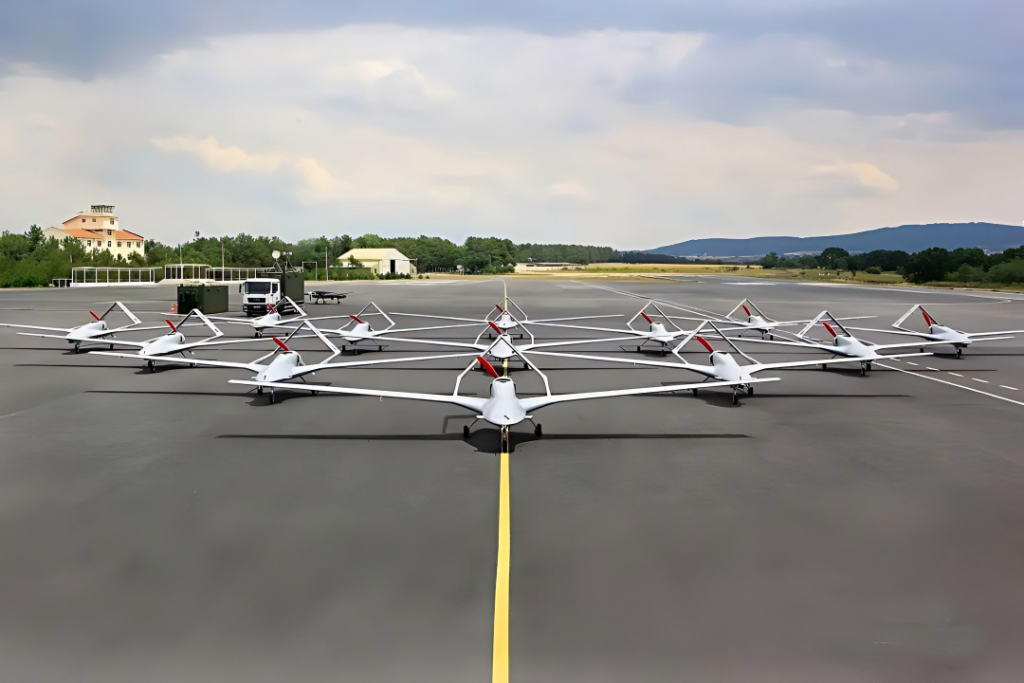
A drone formation equipped with cluster coordination components is performing a large-area reconnaissance mission
4.Environmental Adaptation Components: Let Drones Fly Anywhere
To address the problem of harsh environments, we have developed a complete set of environmental adaptation components:
Plateau Power Upgrade Package: Targeting thin air on plateaus, we have upgraded the motor drive algorithm and high-altitude propellers, which can increase engine power by 30%. Even at an altitude of
5,000 meters, the drone can take off normally without “insufficient power”.
Wide-Temperature Battery Pack: Ordinary batteries fail at -20°C, but our wide-temperature batteries can work normally at -40°C. They also come with a built-in heating module that automatically warms the battery when turned on. Even on the plateau in winter, you can take it out and fly immediately without waiting.
Three-Proof Structural Parts: Targeting coastal salt spray and desert sand, all our components have IP65 three-proof treatment. The sealed structure is resistant to salt spray corrosion and sand intrusion, and components will not be damaged even after flying at the seaside for several months.
Wind Resistance and Stabilization Module: Targeting windy weather, we have upgraded the flight control stabilization algorithm and high-precision IMU module, which allows drones to remain stable in level 7 winds without being blown around.
With these components, your drones are no longer “greenhouse flowers”. They can fly anytime, anywhere —whether on plateaus, at the seaside, or in deserts — and respond to emergencies at any time.
5.Modular Payloads: One Aircraft for Multiple Purposes
Most of the time, military missions are diverse. Today you need reconnaissance, tomorrow you need delivery, and the day after tomorrow you need electronic jamming.You can’t buy a separate aircraft for each mission, right?
Our solution is modular payload components. We have developed a universal interface.As long as your drone is equipped with this interface, you can swap payloads freely:
For reconnaissance: Install an electro-optical pod with visible light, infrared, and laser ranging functions, which can see day and night.
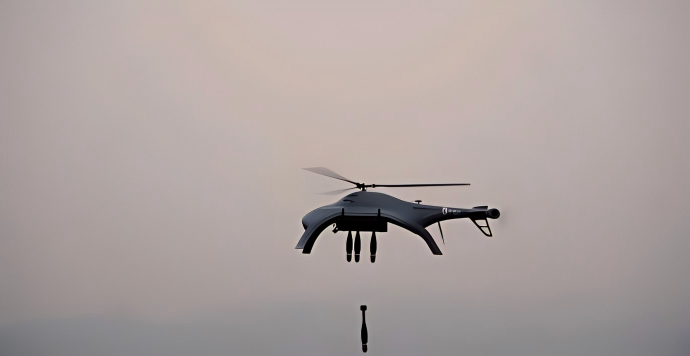
For delivery: Swap to a dropping device that can deliver 5 kilograms of supplies — medicines, ammunition, parts, whatever you need.
For electronic warfare: Swap to an electronic jamming module that can interfere with enemy communications and radar.
For public address: Swap to a loudspeaker that can address targets several kilometers away.
All payloads are quick-release and can be replaced in 1 minute. One aircraft can perform different tasks by changing the payload, which is equivalent to getting the capabilities of several aircraft for the price of one.
III. Three Real Cases: How Components Transform Missions
After talking so much, you may still find it a bit abstract. Let me tell you three real customer cases, and you will understand how useful these components really are.
Case 1: Southeast Coast: Completing 5 Days’ Work in 1 Day
Last year, a unit on the southeast coast was conducting an amphibious landing exercise and needed to map an area of 1,500 square kilometers in one day to provide maps for the landing forces. According to the previous single-aircraft operation, this task would take at least 5 days, which was far behind the exercise schedule.
They came to us, and we equipped their 12 drones with our cluster coordination modules and on-board AI computing power modules.
What was the result? That morning, they launched the 12 drones, which automatically divided the 1,500 -square-kilometer area among themselves. Each flew its own sector, processed the data on the fly, and transmitted back orthophotos and target coordinates in real time.
By afternoon, they had obtained a complete high-precision map and the coordinates of all defensive fortifications and vehicles. The entire mission took only 8 hours, completing what used to take 5 days, increasing efficiency by more than 5 times. During the exercise, these coordinates were directly imported into the artillery system, and the accuracy of fire strikes was directly improved by an order of magnitude, truly realizing “discovery equals destruction”.
Case 2: Central Theater Command: Compressing Strike Time from Minutes to Seconds
You may have heard of that brigade in the Central Theater Command. They innovated the direct connection between drones and artillery, solving the problem of indirect fire.
Previously, when a drone discovered a target, it had to report the coordinates to the artillery, and the artillery staff had to manually convert the coordinates into firing parameters. This process took several minutes, and manual calculations were prone to errors.
They used our high-speed encrypted transmission module and data interface components to directly connect the drones to the artillery fire control system. When the drone discovers a target, the coordinates are transmitted to the fire control system in seconds through the transmission module, the system automatically converts the parameters, and the gunner can fire directly without any manual operation.
The entire process from target discovery to firing takes less than 20 seconds. What used to take several minutes is now done in 20 seconds. During the red-blue confrontation, they used this method to directly takeout the blue army’s command node, catching the enemy off guard.
Case 3: Plateau Outpost: Drones as “Couriers”
A border defense post in Tibet is located in a very remote area with extremely difficult roads. Supplies usually have to be carried by people. If equipment breaks down on the front line, parts cannot be delivered at all, and the equipment remains out of service for several days.
They used our plateau power upgrade package and dropping payload components to upgrade their existing multi-rotor drones.
Now, whenever the front line needs parts, the rear repair shop loads the parts into the drone’s dropping device, and the drone flies directly over and drops them. It takes only 20 minutes to deliver, compared to half a day by road before.
Once, a frontline observation scope broke down and was missing a small part. Previously, it would have taken at least a day to deliver, but they used a drone to drop the part in 20 minutes, and the equipment was repaired the same day without delaying the mission at all.
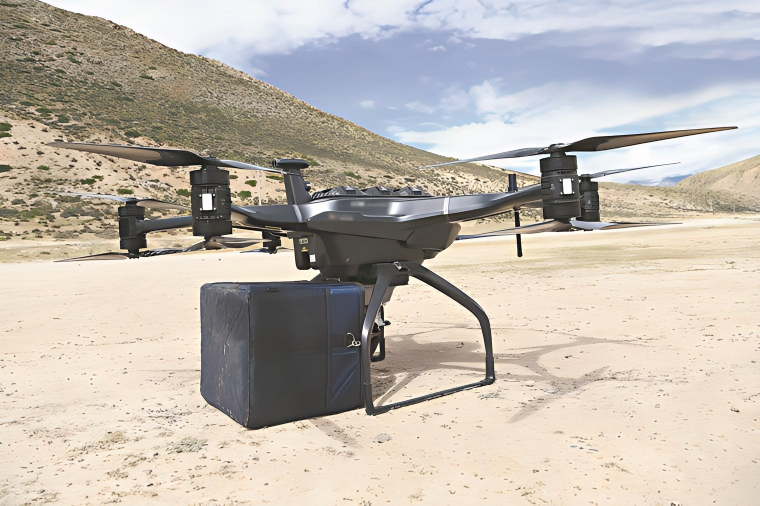
A drone equipped with a dropping component is delivering urgently needed supplies and parts to the front line
IV.Why Our Components Can Solve Your Problems?
You may ask, there are so many drone components on the market, why choose ours?
The answer is simple: our components are forged from frontline actual combat needs. Half of our team has military service experience, and we know what you really need — not those flashy functions, but reliable, easy-to-use, and durable products.
All our components have undergone strict environmental tests: high and low temperature, salt spray, vibration, and electromagnetic interference. All tests are conducted according to military-grade standards, ensuring that they can work stably in any harsh environment when you get them.
Moreover, our components are universally compatible. No matter what brand of drone you use, whether domestic or imported, we can help you adapt them.You don’t need to replace the whole aircraft, and you can get big results with small costs.
Contact Us to Unlock Your Drone’s Combat Effectiveness
If you are also encountering these problems: your drones can’t fly on the plateau? Your data can’t be transmitted back?Your single-aircraft efficiency is too low?Your drones go blind as soon as they encounter interference?
Don’t rush to replace the whole aircraft. Come to our official website to chat. We have a complete set of military-grade UAV components that can help upgrade your existing drones into powerful weapons capable of winning battles.
Whether you need to upgrade computing power, add anti-interference communication, form a cluster, or adapt to harsh environments, we can provide customized solutions to help you solve those headaches and make your drones truly effective on the battlefield.
Contact us for consultation now, and you will get a free drone upgrade plan, as well as access to our full range of UAV component products. Our technical experts will analyze your situation one-on-one and tell you how to maximize combat effectiveness with the minimum cost.
The outcome of a battle often depends on just one tiny component. Don’t let components hold you back.