As a veteran with nearly a decade of experience in the industrial automation field, I have seen far too many automotive plant managers sitting in conference rooms with furrowed brows. On one hand, they face rising labor costs and stringent safety assessment pressures every year; on the other hand, they hesitate: can those digital transformation projects costing tens of millions really deliver returns in the short term?
However, in the past two years, I have noticed an interesting trend: more and more factories are turning their eyes to the sky. A small drone, equipped with different “weapons”, is quietly solving decades-old problems that have plagued factories. Today, combined with several real-world implementation cases, I will talk about how drones have become the “unsung heroes” of cost reduction and efficiency improvement in the automotive industry.
I. The Persistent Headaches We’ve All Faced
Before discussing solutions, let’s first review the most painful pain points in automotive factories.
Nearly every plant manager I have spoken to has endless complaints about inspection and inventory management:
The Safety Nightmare of Working at Heights: Factories have dozens of meters high workshops, intricate pipelines, and various narrow equipment gaps. Previously, workers had to set up scaffolding and operate aerial lifts to inspect these areas, which was not only slow but also extremely risky. A single fall accident would not only result in financial losses but also ruin the entire factory’s safety rating.
The Needle-in-a-Haystack Fault Detection: Hidden dangers such as overheated motors and pipeline leaks are invisible to the naked eye in the early stages. By the time you can feel the heat when touching the equipment, it is often on the verge of failure. For a production line with an annual output of hundreds of thousands of vehicles, an unplanned shutdown for just one day can cause losses of millions of yuan.
The Never-Ending Inventory Count: Large logistics centers cover tens of thousands of square meters with high shelves towering above buildings. A single inventory count requires mobilizing half the department to work overtime for three days, and the final results are often inaccurate, with error rates frequently exceeding 5%.
The Blind Spots in Road Testing: After new vehicles are developed, they need to undergo road tests in the wild. In complex terrain, whether the road ahead is passable or if there are obstacles depends entirely on the driver’s experience. If the vehicle gets stuck in a remote area, rescue can be extremely difficult.
Do these problems sound familiar? In fact, these pain points are precisely where drone technology can deliver the most value.
II. Inside the Factory: Cutting Inspection Time from 2 Hours to 6 Minutes
Let’s start with the most mature implementation scenario: equipment inspection inside factories.
I must mention the pilot project at Jaguar Land Rover (JLR)’s Wolverhampton plant in the UK. I have studied this case extensively because it is a textbook example of “small investment, big return”.
They used the drone shown above, which looks like a “ball in a cage” — the Flyability Elios 3. Unlike consumer drones you might play with, it is entirely surrounded by a protective net. Even if it hits a wall or a pipeline, it will not crash and can continue flying. This is tailor-made for the obstacle-dense environment inside factories.
So what exactly did it achieve? Let’s look directly at the data.
Recommended Payload Stack for Automotive Plants
Drones in automotive factories are most useful when the payload stack matches the inspection or inventory workflow. A case-study structure should describe the challenge, UAV setup, payload, result and repeatability. For plant managers, the main value is not the drone itself; it is safer access, faster data collection and less disruption to production areas.
| Use case | Payload stack | Operational value |
|---|
| Roof and equipment inspection | Visible camera, stabilized gimbal and reliable video link. | Reduces climbing risk and shortens inspection time. |
| Warehouse inventory | Camera, positioning workflow and data export method. | Improves counting speed and reduces manual scanning workload. |
| Thermal equipment checks | Thermal payload plus visual reference camera. | Finds overheating components before downtime occurs. |
| Digital transformation | Video transmission, recording and reporting integration. | Turns flight data into maintenance and management records. |
For payload planning, review UAV gimbal modules, digital video transmission, product options and case references.
FAQ
Where can drones help automotive factories first?
High-access inspection, warehouse inventory, roof checks and visual documentation are usually easier starting points than complex autonomous workflows.
What payload is needed for factory inspection?
A stabilized camera and reliable video link are basic. Thermal imaging can be added when equipment temperature is part of the inspection target.
How should ROI be described?
Use verifiable indicators such as inspection time saved, reduced climbing risk, downtime avoided and repeatable data records.
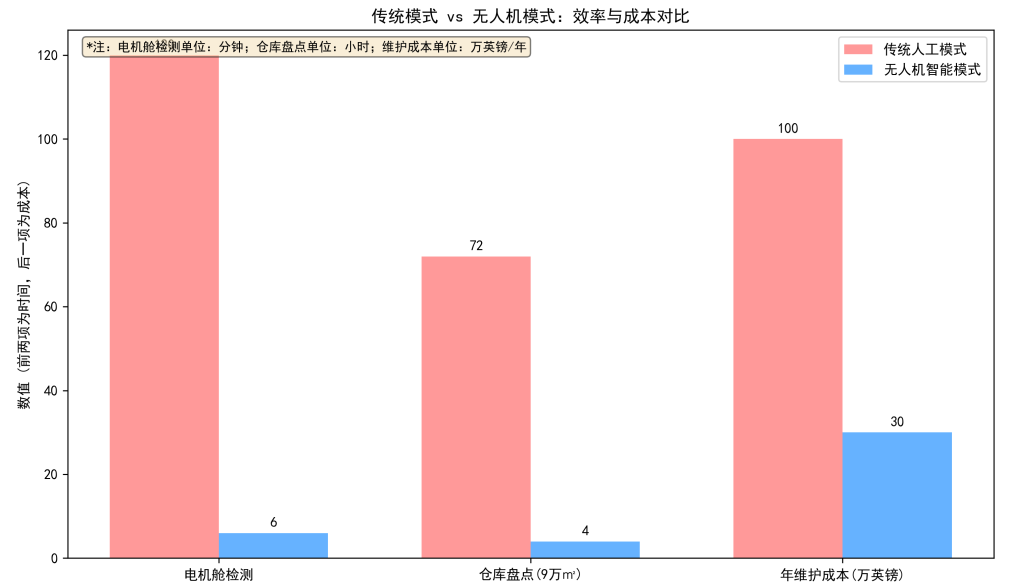
Figure 1: Efficiency and cost comparison between traditional manual mode and drone intelligent modeNote: Motor compartment inspection unit: minutes; warehouse inventory unit: hours; annual maintenance cost unit: 10,000 GBP/year*
As you can see from the chart, previously, it took workers 2 hours to inspect a single motor compartment because they had to set up lifting platforms and climb up carefully. Now, how long does it take with a drone? Precisely 6 minutes.
But that’s not the most impressive part. This drone is equipped with two core “eyes”:
LiDAR: It can build a millimeter-level 3D model of the entire equipment while flying. Previously, missed inspections were common with manual checks. Now, with this 3D model, even a 1-millimeter deformation on the equipment is clearly visible.
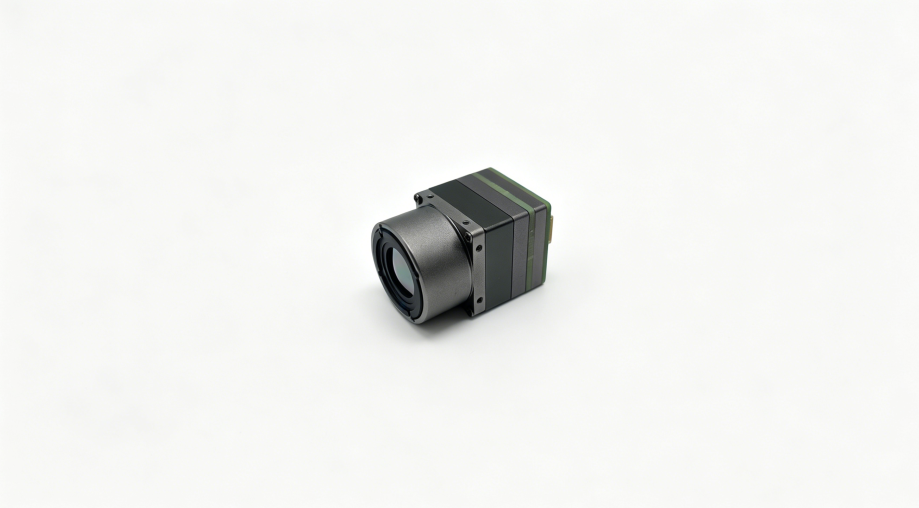
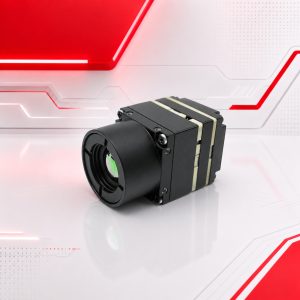
Thermal Imaging Camera: This is the real “magic eye”. It can see through the surface of equipment and directly visualize internal temperature distributions. Is a motor bearing worn and overheating? Is a pipeline leaking heat due to damaged insulation? These invisible hidden dangers appear as bright “hot spots” on thermal images.
Figure 2: Industrial-grade drone thermal imaging camera accessory, the core of predictive maintenance
With these two accessories, Jaguar Land Rover’s engineers can detect potential faults 3 months in advance, transforming the original reactive maintenance (“fix it when it breaks”) into proactive predictive maintenance (“prevent it before it fails”). This has avoided countless unplanned shutdowns that could have brought production lines to a standstill.
According to their calculations, this single factory saves more than 10,000 maintenance hours annually, indirectly creating over 5 million GBP in value. And the investment in this equipment was recouped in less than six months.
III. Warehouse Inventory: 3 Days’ Work Completed in 4 Hours
Having solved the production-side problems, let’s turn to the logistics side.
Jaguar Land Rover has a massive logistics center covering 91,800 square meters — roughly the size of 13 football fields. Previously, how long do you think it took to take inventory here?
The answer is 3 days.
More than a dozen people would operate aerial lifts, scanning barcodes one by one on high shelves. Workers were exhausted, and errors were common, with an error rate exceeding 5%. For the automotive industry, which pursues zero-inventory management, this was simply unacceptable.
So what changed with drones?
They added an HD barcode scanning module to the drones. The drones fly autonomously in the warehouse according to pre-planned routes. When they fly next to a shelf, the camera automatically recognizes and scans the barcode with a “beep”. High shelves? No problem — the drone just flies up.
The result? Inventory counting for the 90,000+ square meter warehouse was reduced from 3 days to just 4 hours. And the error rate? It dropped from 5% to 0.01%.
What does this mean? It means you can now take inventory daily instead of monthly. With real-time accurate inventory data, there are no more discrepancies between books and actual stock, and supply chain response speed is dramatically improved.
IV. Vehicle-Road Collaboration: Equipping Cars with “Eyes in the Sky”
Having covered factories, let’s shift our perspective to the vehicles themselves.
Many automakers are now developing off-road models and conducting autonomous driving tests. In uncharted territories or complex test tracks, drivers always have limited visibility. How deep is that ditch ahead? Can we climb that slope? Are there falling rocks?
What if you could launch a drone from your roof at any time, transmitting real-time footage of the road several kilometers ahead to the in-car display? That would be a game-changer.
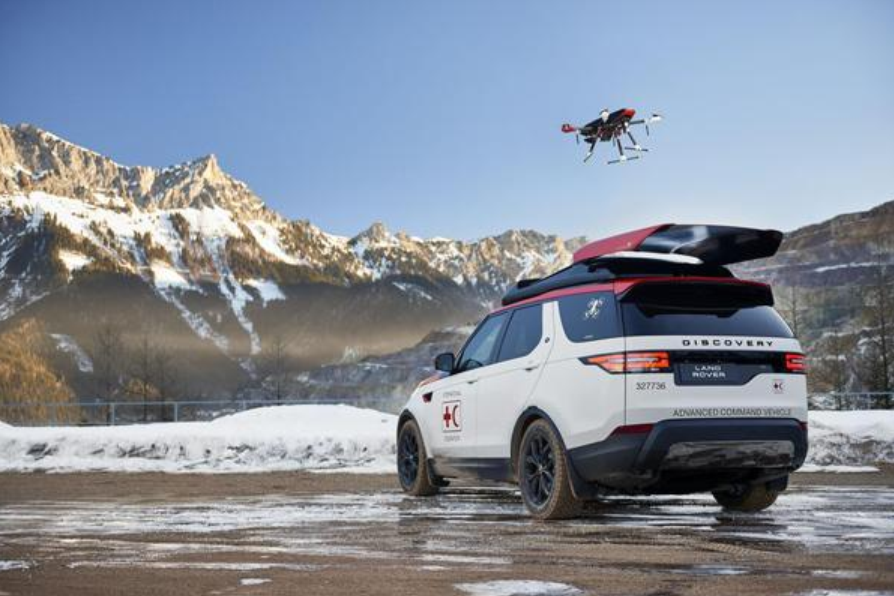
This is the increasingly popular vehicle-mounted drone system.
Eyes in the Sky Enter Factories: How Drones Rewrite the Efficiency Ledger for Automotive Plants
Figure 3: Vehicle-mounted drone system gives vehicles a god’s-eye view
The coolest feature of this system is dynamic takeoff and landing. You might think you have to stop the car for the drone to return? No. Current technology allows drones to land precisely on the roof landing pad even when the vehicle is traveling at 30 km/h.
The technology behind this is quite interesting. Ordinary GPS has an accuracy of several meters, which is insufficient — once the car moves, the drone loses its position. So now, a technology called Moving Baseline RTK is used. Simply put, your car itself becomes a mobile GPS base station, sending high-precision differential data to the drone in real time. This allows the drone to lock onto the moving target with centimeter-level accuracy and land steadily.
With this “eye in the sky”, road test engineers no longer have to guess when testing new vehicles in the wild. The drone flies ahead to scout the route, clearly showing which paths are passable and which are not. Even during extreme vehicle testing, the drone can follow the car and capture first-person test videos from all angles, which is far more useful than fixed cameras.
V. The Core Weapon: Not the Drone Itself, but Its “Versatile” Accessories
At this point, you might be thinking: “Oh, so it’s just buying a drone for the factory?”
That’s not the case. A drone is merely a flying platform. What truly determines what problems it can solve are the accessories (Payloads) it carries.
As we mentioned earlier: for inspections, you need a thermal camera; for inventory, you need a barcode scanning module; for scouting routes, you need a zoom camera. Different scenarios require different “weapons”.
This is why we have been deeply focused on industrial-grade drone accessories. We know that for automotive industry customers, a consumer drone costing a few thousand yuan is useless. What they need are reliable industrial-grade accessories that solve their specific pain points.
For example:
High-Precision Thermal Imaging Camera: The core of predictive maintenance. Our thermal imaging accessories have a temperature measurement accuracy of ±0.5°C, easily identifying tiny temperature differences in equipment to provide early fault warnings. They also adapt to high-temperature and high-humidity factory environments, with an IP67 protection rating against water and dust.
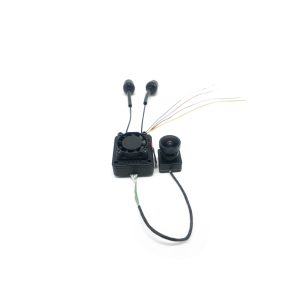
LiDAR Module: Essential for positioning and 3D modeling in indoor GPS-denied environments. With LiDAR, drones can autonomously avoid obstacles and fly in complex workshops.
High-Magnification Zoom Gimbal Camera: For logistics inventory or long-distance inspections, you need to read small text from tens of meters away. A gimbal camera with 10x or even 30x optical zoom is indispensable.
Vehicle-Mounted Dynamic Positioning Module: If you want to implement vehicle-mounted drones, a specialized dynamic takeoff and landing positioning module is a necessity. It enables millisecond-level time synchronization between the vehicle and the drone, solving problems caused by airflow interference and positioning drift.
These accessories are like Lego bricks. You can flexibly combine them according to your needs: install a thermal camera for inspections today, swap in a barcode scanning module for inventory tomorrow. One drone for multiple uses maximizes its value.
VI. Final Thoughts: Digital Transformation Can Start from the “Sky”
When many people hear “digital transformation”, they immediately think of building digital twins, migrating to the cloud, and spending tens of millions. But in reality, transformation often starts with solving specific, small pain points.
Just like Jaguar Land Rover: they started with inspections in a single workshop, used drones to solve safety and efficiency problems, saw tangible ROI (Return on Investment), and then gradually expanded to logistics and the entire factory.
This is the most pragmatic approach.
If you are also struggling with factory inspection efficiency, or are interested in vehicle-mounted drones and industrial-grade accessories, please feel free to contact us for consultation. We can customize the most suitable solutions based on your specific scenarios, and you are welcome to browse our extensive UAV accessory library — we are confident there is a solution for your immediate challenges.
After all, when eyes in the sky truly enter factories, you will find that those old problems that have plagued you for years can actually be solved so simply.