When many overseas clients first inquire about UAV camera gimbals, thermal imaging cameras, or night vision cameras, their top concerns are often about price.
“Can this product be OEM-branded?”
“Can we replace it with our logo?”
“If we want customization, how long will delivery take?”
“We want to develop our own UAV vision solution—should we choose OEM or ODM?”
These questions may seem simple, but anyone who has worked on UAV projects knows that a camera gimbal is not an ordinary accessory. It involves multiple aspects including imaging performance, gimbal stability, interface protocols, power supply methods, installation structures, video output, and UAV platform adaptation. If even one detail is not properly addressed, it will ultimately lead to project delays, repeated testing, customer complaints, or even the failure to deliver an entire batch of products.
Therefore, today we don’t want to just explain the definitions of OEM and ODM. Instead, from the perspective of practical procurement of UAV visual payloads, we want to discuss: Why mature ODM solutions are often a more reliable choice than developing from scratch for overseas B2B clients when selecting camera gimbals, thermal imaging, and night vision camera solutions.
I. What’s the Real Difference Between OEM and ODM?
Simply put:
OEM: The client provides the design, and we handle production.
If you already have clear product structures, technical parameters, interface requirements, brand packaging, and testing standards, then OEM is more suitable for you. The supplier manufactures products according to your requirements to help you complete bulk delivery.
ODM: The supplier has a mature solution, and the client conducts branding or customization based on the solution.
If you want to quickly launch a UAV camera gimbal, thermal imaging camera, or night vision camera but don’t want to start R&D from scratch, ODM will be more efficient. You can adjust the logo, appearance, packaging, interfaces, or partial functional configurations based on existing mature products.
For many overseas UAV brand owners, traders, and system integrators, what they truly need is not “developing an entirely new product from scratch”, but quickly finding a stable, deliverable, and project-compatible mature vision solution.
II. Why You Should Avoid Developing UAV Camera Products from Scratch
Many clients initially think that developing custom products from scratch sounds more professional and aligns better with their brand positioning. However, in the field of UAV camera gimbals, developing from scratch is far more than just changing a shell.
A truly usable UAV camera solution must address at least these issues:
Whether the gimbal remains stable during flight
Whether the image is clear and free of latency
Whether thermal imaging is reliable at night, in smoke, or complex environments
Whether the night vision camera is truly usable in low-light conditions
Whether the gimbal weight affects UAV endurance
Whether the installation structure matches the client’s UAV platform
Whether control protocols, video output, and power supply interfaces are compatible
Whether product consistency is stable after bulk delivery
These issues may not be obvious during the sample phase, but they will be amplified during client testing, project bidding, and bulk procurement.
We have seen cases where clients spent a long time repeatedly modifying structures, interfaces, and parameters to pursue full customization. Although the product was finally developed, the project window had closed, and market opportunities were seized by competitors.
This is why opting for ODM based on mature solutions is a more realistic and efficient choice for most overseas B2B clients.
III. Mature ODM Solutions Solve More Than Just “Saving Time”
Many people think the only value of ODM is fast delivery. In fact, for UAV camera products, the more important value of mature solutions is reducing project risks.
1. Reduce Pre-Testing Costs
Camera gimbals, thermal imaging, and night vision cameras all require extensive testing in real-world scenarios, such as daytime inspections, nighttime monitoring, long-distance observation, low-light environments, complex weather, and flight vibrations.
Mature solutions have usually undergone multiple rounds of debugging, so clients do not need to verify every basic function from scratch and can enter the project adaptation phase faster.
2. Shorten Product Time-to-Market
For UAV brand owners and traders, time is market opportunity. If a project is delayed too long from design to sampling and bulk delivery, client needs may have changed, or competitors may have already entered the market first.
ODM solutions allow clients to complete branding, packaging, and product launch more quickly.
3. Reduce Uncertainties in Communication and Development
When developing from scratch, it is easy for clients and suppliers to have repeated communication due to misunderstandings of parameters, structural design, and platform adaptation. Mature solutions, however, provide a usable foundation first, with adjustments made around actual needs—resulting in much higher efficiency.
IV. How Should Different Clients Choose Between OEM and ODM?
If you are a UAV brand owner with a complete product roadmap and technical team, OEM may be more suitable. You can provide detailed specifications, and the supplier will cooperate with production and delivery.
If you are an overseas trader looking to quickly add UAV camera gimbals, thermal imaging cameras, or night vision cameras to your product line, ODM is more suitable. You can adjust logos, packaging, and configurations based on mature products to launch them to the market faster.
If you are a system integrator serving projects such as security, inspection, search and rescue, border surveillance, and forest fire prevention, we recommend prioritizing mature solutions and then adapting them to the project platform. Such projects value stability and delivery efficiency more than excessive customization.
If you are a project purchaser unsure about specific parameters, you can first submit information about application scenarios and UAV platforms, and let the supplier recommend suitable solutions.
V. Which UAV Visual Products Are Suitable for OEM/ODM?
In the field of UAV visual payloads, products suitable for OEM/ODM include:
Camera gimbals
Ideal for scenarios such as inspection, monitoring, aerial photography, and target observation. Clients typically focus on zoom capability, gimbal stability, installation methods, and control interfaces.
Thermal imaging cameras
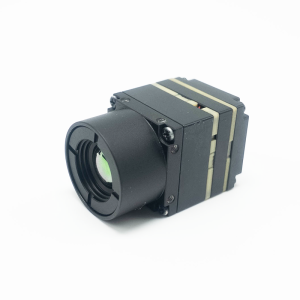
Suitable for nighttime patrols, power inspection, fire rescue, forest fire prevention, border security, and other scenarios. Clients usually care about resolution, detection distance, temperature measurement capability, and imaging stability.
Night vision cameras
Suited for low-light environments, nighttime patrols, security monitoring, and emergency missions. Clients typically focus on low-illumination performance, image clarity, effective range, and power consumption.
These products are not just about “capturing images”. Products truly suitable for B2B projects must work stably in clients’ actual UAV platforms and application scenarios.
VI. What Information Should Overseas Clients Provide When Submitting Requirements?
If you are looking for OEM/ODM solutions for UAV camera gimbals, thermal imaging cameras, or night vision cameras, we recommend providing the following information in the official website form as much as possible:
Your client type: brand owner, trader, system integrator, or project purchaser
Required product type: camera gimbal, thermal imaging camera, or night vision camera
Main application scenarios: inspection, security, search and rescue, forest fire prevention, border surveillance, etc.
UAV platform used or expected load capacity
Whether logo, packaging, or appearance customization is needed
Any requirements for interfaces, video output, or control protocols
Expected procurement volume and target market
The clearer this information is, the easier it is for suppliers to determine whether OEM or ODM is suitable for you, and to recommend appropriate mature solutions faster.
Finally: Truly Good OEM/ODM Is Not Just Simple Branding, But Helping Clients Avoid Detours
For UAV camera gimbals, thermal imaging cameras, and night vision cameras, the value of OEM/ODM lies not only in production or logo sticking.
A truly valuable collaboration is helping clients find a visual payload solution that fits the market, the project, and the UAV platform in a shorter time.
If you are looking for mature OEM/ODM solutions for UAV camera products, please submit your requirements through our official website form. You can tell us your application scenarios, UAV platform, and customization needs, and we will recommend suitable camera gimbal, thermal imaging, or night vision camera solutions based on your project situation.