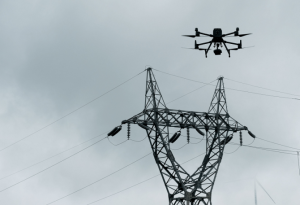
As someone who has spent five years in the industrial drone industry, I have seen too many teams enter the field with high hopes and leave disappointed. In 2025, the global industrial drone market reached USD 51 billion, with North America accounting for 27% (USD 13.77 billion) and Europe accounting for 18% (USD 9.18 billion). But the hard truth is this: fewer than 10% of industrial drone projects truly achieve their expected return on investment (ROI).
I still remember the oil and gas inspection project in Texas three years ago that kept me awake at night. We invested nearly USD 350,000, purchased the most advanced drone platform available at the time and a range of “cutting-edge” accessories, and confidently believed we could deliver a perfect answer to the client. What happened? Because of one small payload compatibility issue, the entire project was delayed by three months. In the end, we barely passed acceptance and made almost no profit.
After that, I began to reflect: why did we spend so much money on the best equipment, yet still fail? After reviewing more than a hundred projects and spending countless late nights analyzing them, I reached a conclusion that surprises most people: most industrial drone projects fail not because the platform is not good enough, nor because the technology is not advanced enough, but because we make too many avoidable mistakes in the most basic accessory selection decisions.
1. Why Do 90% of Industrial Drone Projects Die in the “Last Mile”?
Many people believe the core of an industrial drone project is the platform and the algorithm. But during real-world deployment in North America and Europe, I have found that what truly determines success or failure is often the accessories that seem insignificant.
1.1 The “Specification Trap”: Great on Paper, Weak in the Field
This is the most common misconception in the industry. Too many procurement managers make decisions by staring only at the numbers on the specification sheet: resolution, flight endurance, payload capacity, and so on. They ignore the most important question: how much of these specifications can actually be delivered in the real working environment?
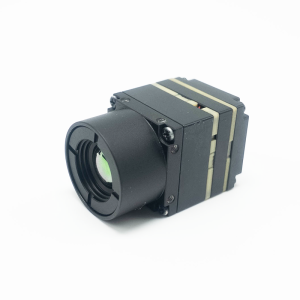
I have seen too many examples like this. One infrared thermal imaging payload claimed 0.05 deg C temperature difference detection accuracy, but under the blazing Texas sun, it struggled to distinguish even a 2 deg C difference. One LiDAR unit claimed a 2-kilometer ranging distance, but in the heavy fog common in Northern Europe, its effective range was less than 400 meters.
Even worse, many suppliers deliberately inflate specifications. I once bought an industrial-grade storage card labeled as 512 GB, but its actual capacity was only 128 GB. As a result, during a critical pipeline inspection mission in Alberta, Canada, we lost half of our data.
1.2 The “Compatibility Nightmare”: The Tragedy of 1+1<2
Unlike consumer electronics, drone accessories do not have a unified universal standard. The industry is full of unwritten rules that suppliers will not proactively tell you. But if it does not fit, it does not fit. If it is incompatible, it is incompatible.
The first major pitfall I fell into was matching motors with an airframe. At the time, I bought a very classic industrial airframe and high-end T-Motor motors. Only after receiving them did I discover that the motor mounting hole spacing did not match the spacing on the frame arms. One was 16 mm x 19 mm, and the other was 16 mm x 16 mm. Because of that 3 mm difference, the entire project was delayed by one week.
The most fatal compatibility problems occur between flight controllers and payloads. You can buy the best flight controller and the best gimbal camera, but they may simply fail to communicate properly. You may encounter data transmission delays, lost control commands, and other issues, ultimately making the reliability of the entire system far lower than the level of each component on its own.
1.3 The “After-Sales Black Hole”: No One Helps When Problems Happen
Industrial drones work in extremely harsh environments: extreme temperatures, high humidity, dust, strong vibration, and more. Accessory damage is inevitable. But when equipment fails, many Western companies discover that the supplier’s after-sales support effectively does not exist.
I once encountered this situation during a wind power inspection project in Denmark. A payload worth USD 75,000 was damaged and sent back to the manufacturer for repair. It took six weeks to get it fixed, and the repair cost was almost 60% of the original price. Even worse, some small suppliers we had worked with had already gone out of business by the time we needed help, leaving us with a pile of expensive scrap metal.
2. The Most Expensive Accessory Pitfalls European and American Operators Have Faced
Over the past five years, I have made more mistakes than I can count. Today, I want to share three of the most common and costly pitfalls in the North American and European markets, hoping they can help others avoid the same detours.
2.1 Batteries: The Price of Chasing Savings May Be the Whole Aircraft
The battery is the “heart” of a drone, but it is also the component most easily compromised. To save money, many European and American operators choose third-party batteries that cost only half as much as original batteries. This is absolutely not worth it.
The protection circuits in third-party batteries are usually very rudimentary. They are prone to overcharging and overdischarging, and may even cause fires. I personally witnessed a team in California use poor-quality batteries that caused a drone to suddenly catch fire in flight and crash from 150 feet, nearly hitting ground staff. The USD 120,000 inspection drone was completely written off.
In addition, the actual capacity of third-party batteries is usually only 60% to 70% of the rated value. A mission originally planned for 30 minutes may have to return after 20 minutes, severely affecting work efficiency. In Europe, EASA regulations require strict flight planning, and this kind of endurance shortfall can also create costly compliance problems.
2.2 Propellers: One Small Mistake Can Become a Major Accident
Propellers are the “wings” of a drone and are directly related to flight safety. But many operators treat them like disposable consumables and do not take them seriously.
I have seen people buy colorful aftermarket propellers just because they look good. What was the result? These propellers had poor materials and inaccurate dynamic balancing, causing severe vibration during flight. This not only affected image quality, but also increased motor load and shortened component life.
The real danger comes from propeller fracture. Low-quality propellers may suddenly break under high stress, causing the drone to lose control instantly. I experienced this during a construction surveying mission in Germany: one propeller blade broke in midair, and the drone crashed into an open area. Fortunately, no one was nearby at the time, otherwise the consequences would have been unthinkable. But the entire aircraft was completely scrapped.
2.3 Data Storage: Losing Data Is the Biggest Project Disaster
For industrial drones, data is everything. If the data is lost, all the time, money, and effort invested before that point are wasted.
Many operators look only at capacity and price when choosing storage cards, completely ignoring speed and durability. I have used cheap storage cards that frequently stuttered and dropped frames when recording 4K video. The most serious case happened during a critical power line inspection mission in the United Kingdom. After we completed the flight, the storage card suddenly failed, and all the data on it was unrecoverable.
We had to refly the entire 120-mile route, wasting two weeks of work and nearly facing a huge penalty from the client.
3. From “Usable” to “Truly Useful”: Golden Rules for Drone Accessory Selection in European and American Markets
After countless trials, errors, and reviews, I gradually developed a verified methodology for selecting accessories. It is especially suitable for European and American markets, where costs are high and regulation is strict, and it can help you avoid at least 90% of common problems.
3.1 Requirements-Backwards Method: Do Not Pay for Features You Will Never Use
Many operators fall into the “future-proofing” trap. They always want to buy the most powerful accessories with the highest specifications. But the reality is that most of those features will never be used.
The right approach is this: start from your specific mission requirements and work backward to determine what accessories you actually need.
If you are only doing ordinary aerial surveying, a 20-megapixel RGB camera is enough. There is no need to buy a USD 50,000 medium-format camera. If you only operate during the day, then night vision devices and searchlights are unnecessary expenses.
Remember: the best accessory is not the most powerful one, but the one that best matches your needs.
3.2 Three-Step Compatibility Testing: Solve Problems Before the Project Starts
To avoid compatibility disasters, I use a strict three-step testing process:
Pre-purchase verification: always ask the supplier for written proof that the accessory is compatible with your existing equipment. Require them to provide customer references who have used the same combination you are considering.
Small-batch testing: never start with bulk purchasing. Buy one set first and conduct comprehensive testing, including communication, data transmission, and control accuracy.
Environmental simulation testing: test accessories under conditions similar to your actual working environment. If you work in hot climates, conduct thermal stress testing. If you operate in rainy regions, verify the waterproof rating.
Only accessories that pass all three tests should be considered for large-scale procurement.
3.3 Five-Dimension Supplier Evaluation Model: Choose a Partner, Not Just a Supplier
In European and American markets, transportation takes time and labor costs are high. Choosing a reliable supplier is more important than choosing a good product. I usually evaluate suppliers across five key dimensions:
Technical capability: do they have internal engineers who understand drone integration?
Product quality: do they have strict quality control processes and relevant certifications?
After-sales support: what is their response time? Do they provide local support in your region?
Industry reputation: how do other operators evaluate them? Do they have successful case studies?
Total cost of ownership: consider not only the purchase price, but also maintenance costs, delivery cycles, and downtime losses.
4. To Everyone Still Working in the Drone Industry
Finally, I want to say a few words to everyone who, like me, is working hard in this industry full of both hope and challenge.
The industry we work in is full of opportunities, but also full of setbacks. Every day, we have to solve all kinds of technical problems, deal with complex FAA and EASA regulations, and face unrealistic customer expectations. There are many times when we think about giving up.
But I believe what we do is meaningful. We use machines to replace humans in dangerous and repetitive work. We make industries safer, more efficient, and more sustainable. We are building the future of aviation.
I am not writing this article to complain about the difficulties of the industry, but to share the hard-earned lessons I paid for dearly. If my experience can help you avoid even one expensive mistake and make your next project a little smoother, then this article was worth writing.
If you have also encountered similar pitfalls in accessory selection, or if you have your own lessons to share, you are welcome to contact us through the official website. Let us learn from each other, grow together, and build a stronger industrial drone industry on both sides of the Atlantic.