When Night Is No Longer a Boundary: How UAV Night Vision Cameras Redefine the Possibilities of Low-Altitude Operations
Jul 21, 2025
As a practitioner with nearly a decade of experience in the UAV industry, I have witnessed countless missions being forced to halt as night falls. Firefighters anxiously wait for dawn at mountain forest fire scenes, power inspection personnel cannot troubleshoot line faults in the dead of night after typhoons, and search and rescue teams race against time in the vast darkness yet are left helpless. These scenes have made me feel powerless time and again, and also strengthened my belief: Genuine UAV technology should enable human vision to break through the constraints of day and night.
Today, I want to delve into UAV night vision cameras with everyone —— an accessory once regarded as a “high-end luxury item” that has now become a standard configuration for more and more industrial UAVs. It has not only changed the way we operate but also redefined the boundaries of low-altitude operations.
I. Why Night Operation Capability Is Becoming the Core Competitiveness of Industrial UAVs
In many people’s perception, UAVs are mainly used during the day. However, the truth is that over 70% of emergency incidents occur at night or in low-light environments. From natural disaster rescue to public security patrols, from power line inspection to agricultural pest and disease monitoring, the demand for night operations is growing exponentially.
Three Major Pain Points of Night Operations
In the past, UAV operations at night faced almost insurmountable obstacles:
Extremely low visibility: Ordinary cameras can barely capture images in moonlight, and are completely black in moonless nights
High safety risks: Pilots cannot clearly judge the position of obstacles, making collision accidents highly likely
Low operational efficiency: Only visual observation by the naked eye is possible, making it impossible to obtain accurate data and images
These pain points have forced many industries to adopt a “daytime operation, nighttime standby” model, which not only significantly increases labor costs but, more importantly, may cause the loss of the optimal response window in emergencies.
Revolutionary Changes Brought by Night Vision Cameras
The emergence of UAV night vision cameras has completely changed this situation. It enables UAVs to capture clear images in complete darkness, extending operational hours from 8 hours a day to 24 hours. For enterprises, this means:
3x increase in operational efficiency: One UAV can complete the workload that previously required three
Substantial improvement in response speed: Deployment can be immediate after an emergency occurs, without waiting for dawn
Significant reduction in operational costs: Reduces the risks and costs of personnel working outdoors at night
II. A Comprehensive Guide: Three Major Technical Routes of UAV Night Vision Cameras
Many customers ask me during consultations: “Why do night vision cameras range in price from several thousand yuan to several hundred thousand yuan?” The answer lies in the different technical routes they adopt. Currently, there are three main types of mainstream UAV night vision technologies on the market, each with its unique advantages and applicable scenarios.
1. Low-Light Enhancement Technology: “Eagle Eyes” Under Moonlight
Low-Light Enhancement Technology amplifies weak ambient light thousands of times through high-sensitivity image sensors and advanced image processing algorithms, enabling the capture of clear color images under moonlight or even starlight.
Advantages:
Imaging effect is close to daytime with high color reproduction
Relatively low cost, suitable for large-scale applications
Low power consumption, minimal impact on UAV endurance
Applicable Scenarios: Urban patrols, traffic monitoring, port and terminal management, and other scenarios with a certain amount of ambient light
Notes: Cannot work in completely dark environments and is susceptible to interference from strong light
2. Active Infrared Night Vision Technology: “Searchlight” in the Dark
Active Infrared Night Vision Technology works by emitting infrared light (invisible to the human eye) to illuminate targets, then receiving the reflected infrared light to form images.
Advantages:
Can operate in completely dark environments
Clear imaging with rich details
Moderate cost
Applicable Scenarios: Warehouse monitoring, factory patrols, short-range search and rescue, etc.
Notes: Limited effective range (usually within 100 meters), easy to be detected by the other party, not suitable for covert operations
3. Thermal Imaging Technology: The True “All-Weather” Solution
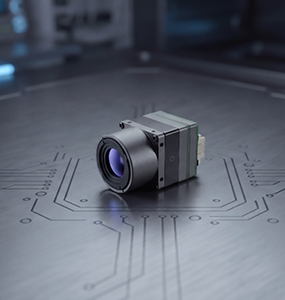
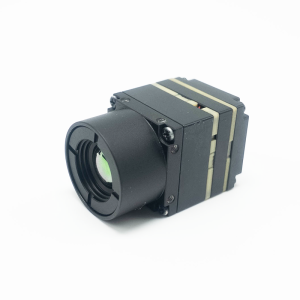
Thermal Imaging Technology forms images by detecting the infrared radiation emitted by objects themselves. It does not rely on any external light source and can work normally even in harsh environments such as complete darkness, smoke, and dust.
Advantages:
True all-weather, all-time operational capability
Can penetrate obstacles such as smoke, dust, and light rain
Can detect temperature differences to find hidden targets
Long effective range (up to several kilometers)
Applicable Scenarios: Forest fire prevention, power inspection, search and rescue, border patrols, etc.
Notes: High cost, unable to display the color and fine details of objects
III. From Lab to Field: Industry Stories Transformed by Night Vision Cameras
The value of technology ultimately lies in practical applications. Over the past few years, I have personally witnessed the miracles created by UAV night vision cameras in various industries. These real stories are more persuasive than any technical parameters.
Case Study 1: Power Inspection —— “Line Doctors” in the Dead of Night
Last summer, a certain state was hit by a rare typhoon disaster, causing damage to multiple high-voltage transmission lines. The local power company urgently deployed UAVs equipped with thermal imaging night vision cameras to immediately conduct inspections in the deep night after the typhoon.
The line inspections that would take days to complete with traditional manual methods were fully finished by UAVs in less than 3 hours. More importantly, the thermal imaging cameras accurately detected multiple hidden risks of overheating at line connectors that were difficult to spot manually, avoiding a potential large-scale power outage.
Case Study 2: Forest Fire Prevention —— Detecting Fires 72 Hours in Advance
A characteristic of forest fires is that “small fires turn into major disasters”. If fires can be detected and extinguished in the early stages, losses can be minimized. However, traditional lookout towers and manual patrols struggle to detect fires in a timely manner at night and in complex terrain.
A national nature reserve introduced UAVs equipped with thermal imaging night vision cameras for 24/7 uninterrupted patrols. The system can automatically identify areas with abnormal temperatures and issue alerts, reducing the average fire detection time from 2 hours to less than 5 minutes. Over the past year, the reserve detected and extinguished 12 forest fires in advance using UAVs, protecting tens of thousands of mu of forest resources.
Case Study 3: Search and Rescue —— “Beacon of Life” in the Dark
Last winter, a mountain climber got lost in the mountainous area and lost mobile phone signal. The local search and rescue team dispatched immediately after receiving the alarm, but ground search and rescue efforts progressed slowly due to darkness and slippery roads.
At a critical moment, rescuers deployed a UAV equipped with a thermal imaging night vision camera. Only 15 minutes later, the UAV detected the heat signature of the stranded person in a valley. Based on the accurate location provided by the UAV, rescuers rushed to the scene and successfully rescued the stranded person.
IV. How to Choose a UAV Night Vision Camera That Suits You?
Faced with a wide range of products on the market, many customers feel confused: “Which technical route of night vision camera should I choose? Which parameters are the most important?” Based on years of industry experience, I have summarized the following key selection criteria.
Step 1: Clarify Your Core Needs
Before choosing a night vision camera, first ask yourself three questions:
In what environment will I mainly operate? (Urban / Wild / Maritime)
What is the required operational range?
What is my budget?
If your main operational scenario is urban areas and your budget is limited, a low-light enhancement camera may be the best choice; if you need to operate in completely dark wild environments, an active infrared or thermal imaging camera will be more suitable; if you require long-distance detection and operational capability in harsh environments, a thermal imaging camera is the only option.
Step 2: Focus on These Core Parameters
Many people only look at pixels and price when choosing a night vision camera, which is a big misconception. For night vision cameras, the following parameters are more important:
Parameter
Low-Light Enhancement Camera
Active Infrared Camera
Thermal Imaging Camera
Sensitivity
Most important (lower is better)
Important
Most important (lower NETD value is better)
Resolution
Important
Important
Important
Effective Range
Important
Most important
Most important
Power Consumption
Important
Important
Important
Weight
Important
Important
Important
Step 3: Choose a Reliable Supplier
UAV night vision cameras are high-tech products, and their quality and reliability are directly related to operational safety and effectiveness. When choosing a supplier, do not only focus on price; instead, pay more attention to:
The supplier’s technical strength and industry experience
The product quality control system
After-sales service and technical support capabilities
Customer reputation and reviews
V. Finally: The Warmth of Technology Lies in Protection
Many people ask me why I have persisted in deepening my work in the niche field of UAV night vision. My answer is simple: Because I have seen too many lives saved by technology, and too many lives made better because of technology.
I still remember the mountain climber rescued by a UAV last year. After being rescued, he held my hand tightly and said: “I was desperate at that time, thinking I would never see my family again. It was your UAV that gave me a second life.” At that moment, I deeply felt that what we do is not just selling a product, but also conveying a sense of hope and protection.
In the future, with the continuous advancement of technology, UAV night vision cameras will become smarter and more compact. They will enter more industries and serve more people. But no matter how technology evolves, our original aspiration will never change: Using the power of technology to make the night no longer terrifying and to protect lives better.
If you are also interested in UAV night vision technology, or encounter any problems in practical applications, please feel free to communicate with me at any time. Let us together explore the infinite possibilities of the night.