As a practitioner with years of experience in the drone industry, I have witnessed countless scenarios like these: late-night power line inspections, where inspectors trudge along rugged mountain roads with flashlights, only able to see parts of the transmission towers; warehouse security patrols, where ordinary cameras are rendered useless by heavy fog and darkness, allowing suspicious individuals to move freely in blind spots; mountain forest fire warnings, where by the time open flames are spotted with the naked eye, the fire has already spread to an uncontrollable extent.
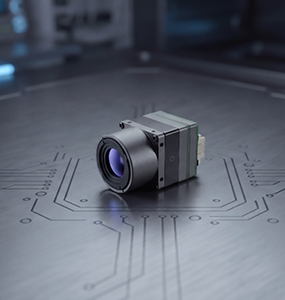
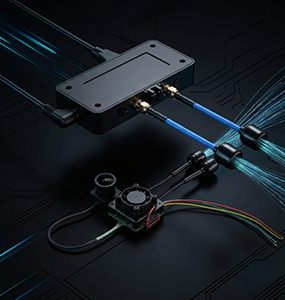
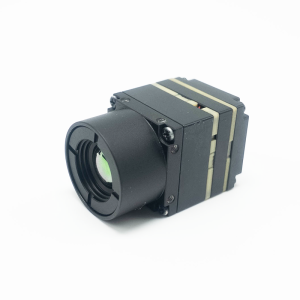
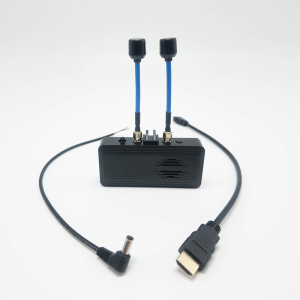
These pain points have resonated deeply with us. It was not until the integration of thermal imaging technology with drones that revolutionary solutions were brought to these long-standing industry challenges. Today, from a practitioner’s perspective, I want to delve into drone thermal imaging cameras — they are not just simple accessories, but core tools that can completely transform the way we work.
I. Why Do We Urgently Need Drone Thermal Imaging Technology?
Before the advent of thermal imaging technology, drone operations faced three insurmountable natural obstacles.
1.1 Absolute Limitations of Illumination Conditions
Ordinary visible-light cameras rely entirely on ambient light and are almost completely ineffective in harsh conditions such as nighttime, heavy fog, thick smoke, and sandstorms. This means our drones can only operate on clear daytime, with a great deal of time and resources wasted waiting for favorable weather. More importantly, many safety hazards are precisely more likely to occur at night and in severe weather.
1.2 Limitations of Target Recognition
Visible-light cameras can only identify the surface features of objects, unable to penetrate obstructions or detect hidden problems. For example, overheating of power line connectors, water leakage points in buildings, and leaks in underground pipelines — these issues are completely undetectable to the naked eye and ordinary cameras until they cause serious consequences.
1.3 The Ceiling of Operational Efficiency
Traditional manual inspections and visible-light drone inspections require point-by-point checks, resulting in extremely low efficiency. For large-area inspections, a huge amount of manpower and time must be invested, and missed inspections and false inspections are also prone to occur.
It is these pain points that have made thermal imaging technology a necessity in the drone industry. By detecting infrared radiation emitted by objects, it converts temperature differences into visual images, completely breaking the limitations of illumination and vision, and endowing drones with “see-through vision” and “all-weather operational capabilities”.
II. Core Principles and Key Parameters of Drone Thermal Imaging Technology
Many people misunderstand thermal imaging technology as simply “night vision goggles”. In fact, night vision goggles only amplify weak visible light, while thermal imaging technology operates on an entirely different principle.
2.1 Basic Principles of Thermal Imaging
All objects with a temperature above absolute zero (-273.15°C) emit infrared radiation. A thermal imaging camera receives this radiation through an infrared detector, converts it into electrical signals, and then forms the thermal images we see after signal processing and image reconstruction.
Simply put, a thermal imaging camera does not see light, but temperature. Different colors represent different temperatures — warm colors (red, orange, yellow) typically indicate high-temperature areas, while cool colors (blue, green, purple) represent low-temperature areas.
2.2 Key Parameters for Selecting Thermal Imaging Cameras
For industrial applications, the following parameters directly determine the performance and effectiveness of thermal imaging cameras:
Detector Resolution: This is the most important parameter, determining image clarity and detail performance. Common resolutions include 160×120, 320×240, 640×512, etc. Higher resolution allows for identifying smaller targets with richer details.
Temperature Measurement Accuracy: Critical for applications requiring precise temperature measurement (e.g., power inspections, industrial testing). Generally, a temperature measurement accuracy of ±2°C or ±2% is the industry standard.
Temperature Measurement Range: Different application scenarios require different temperature ranges. General security and search-and-rescue applications typically cover -20°C to 150°C, while industrial testing and fire-fighting applications demand a higher range, up to 600°C or even 2000°C.
Frame Rate: Determines image smoothness. For fast-moving targets and dynamic scenarios, a higher frame rate is required — generally, 30Hz or above ensures non-stuttering images.
NETD (Noise Equivalent Temperature Difference): Reflects the sensitivity of a thermal imaging camera. A smaller NETD value means the camera can distinguish smaller temperature differences, making it easier to detect weak thermal signals.
III. Practical Applications of Thermal Imaging Drones in Four Core Industries
The value of thermal imaging technology ultimately lies in practical applications. After years of development, thermal imaging drones have been widely adopted in multiple industries, achieving remarkable results.
3.1 Power Industry: From “Post-Event Repair” to “Pre-Event Prevention”
Power inspection is one of the most mature application areas for thermal imaging drones. Traditional power inspections require inspectors to climb towers for checks, which is not only inefficient but also highly dangerous. Thermal imaging drones can quickly detect hidden hazards such as overheating power line connectors, degraded insulators, and abnormal heating of transformers without contacting live equipment.
Statistics show that using thermal imaging drones for power inspections is more than 10 times more efficient than manual inspections, and can detect over 90% of early hidden hazards, significantly reducing the incidence of power outages.
3.2 Security Industry: All-Weather, No-Blind-Spot Safety Protection
In the security field, thermal imaging drones can conduct large-scale patrol monitoring at night and in severe weather, effectively preventing intrusion, theft, sabotage, and other acts. They can penetrate smoke and darkness to clearly identify hidden personnel and vehicles, and can realize automatic alarms through intelligent analysis technology.
Especially in scenarios such as border patrols, oilfield security, and warehouse monitoring, thermal imaging drones have become an indispensable security force.
3.3 Fire-Fighting Industry: A “Life Detector” in Fire Scenes
In fire rescue, thermal imaging drones can penetrate thick smoke to quickly locate fire sources and trapped persons, providing accurate information for fire command. They can also real-time monitor temperature changes in the fire scene, predict the direction of fire spread, help firefighters formulate scientific rescue plans, and minimize casualties and property losses to the greatest extent.
3.4 Agricultural Industry: The “Smart Eye” of Precision Agriculture
In agriculture, thermal imaging drones are used for crop growth monitoring, pest and disease control, irrigation management, etc. By detecting temperature differences in crops, they can identify early pest and disease infestations and water shortages, helping farmers take timely measures to improve crop yield and quality.
IV. How to Choose a Suitable Drone Thermal Imaging Solution?
Faced with a wide range of thermal imaging products on the market, many customers feel confused. In fact, choosing a thermal imaging solution is not that complicated — the key is to align it with your actual needs.
4.1 Clarify Application Scenarios and Core Requirements
Different application scenarios have completely different requirements for thermal imaging cameras. If you mainly use it for power inspections and industrial testing, you need a thermal imaging camera with high resolution and high-precision temperature measurement; if it is for security patrols and search-and-rescue operations, you need one with high sensitivity and long-distance detection capabilities.
4.2 Consider Compatibility with Drone Platforms
A thermal imaging camera must be perfectly compatible with the drone platform to deliver optimal performance. When selecting a thermal imaging camera, be sure to confirm whether it supports your drone model and whether additional modification and debugging are required.
4.3 Focus on Software and Data Analysis Capabilities
The value of thermal imaging technology lies not only in acquiring thermal images but also in analyzing and processing image data. A good thermal imaging solution should be equipped with professional data analysis software that can automatically identify anomalies, generate reports, and establish databases, helping users improve work efficiency.
4.4 Do Not Neglect After-Sales Service and Technical Support
Thermal imaging technology is a high-tech field, and various problems are inevitably encountered during use. Choosing a supplier with good after-sales service and technical support can ensure you have no worries during use.
V. The Future Is Here: Evolution of Thermal Imaging Technology and Its Industry Mission
As a practitioner in the drone industry, I have personally witnessed thermal imaging technology move from laboratories to industrial applications, evolving from an expensive luxury to an industry standard. It has not only changed the way we work but also saved countless lives and protected enormous property security.
In the future, with the continuous development of artificial intelligence, 5G, cloud computing, and other technologies, thermal imaging drones will become smarter, more efficient, and more widely used. They will be applied in more industries, bringing more convenience and safety to our lives and work.
We deeply understand that every customer who chooses our products is entrusted with the mission of ensuring safety, improving efficiency, and creating value. Therefore, we are not just selling products, but providing solutions and conveying the power of technology. We are willing to work with all industry peers to continuously explore the infinite possibilities of thermal imaging technology, jointly promote the development of the drone industry, and contribute our strength to building a safer and smarter world.
If you have any questions about the application and selection of thermal imaging drones, welcome to visit our official website to communicate with us. Let us together change the world with technology.