UAV Component Lightweighting Trends: Real Weight Reduction Means Putting Every Gram to Work for the Mission
When talking with many UAV integrators, channel partners, and industry customers, the questions I hear most often are: Can endurance be a little longer? Can payload be a little higher? Can the price be a little lower?
People who have truly worked on projects know that these three questions often end up pointing to the same answer: weight.
For an industrial UAV, the performance boundary is often not decided by one eye-catching specification. It is built up gram by gram through the airframe, gimbal, camera, battery, propellers, and wiring harnesses. An extra 100 grams may mean several fewer minutes of flight; 100 grams saved may also give the customer a little more safety margin.
So lightweighting is no longer just a marketing phrase for complete UAV manufacturers. It is becoming a core competitiveness factor in the UAV component supply chain.
1. Why Has Lightweighting Suddenly Become a Hard Metric?
An electric UAV is essentially an energy-limited system. Battery capacity, mission payload, structural strength, wind resistance, and heat dissipation space are all competing for a limited weight budget.
For businesses serving European and American markets, weight is also related to compliance boundaries. In the United States, FAA Part 107 applies to small UAS weighing less than 55 pounds; in Europe’s EASA Open category, 25 kg is also an important threshold. Every extra gram added when customers choose components may affect whole-aircraft classification, flight planning, and subsequent operating costs.
End customers do not pay for “lightness” itself. They pay for the results lightweighting brings: longer time aloft, greater effective payload, lower motor load, more stable images, and less maintenance pressure.
2. The Focus of Lightweighting Is Shifting from the Whole Aircraft to Components
In the early days, when people talked about UAV lightweighting, many first thought of carbon fiber airframes, thinner housings, and batteries with higher energy density. But after working on more projects, it becomes clear that the weight most easily overlooked is often hidden in small components.
For example, the body weight of a gimbal pod may look good, but if installation still requires brackets, vibration-damping plates, adapter cables, and counterweights, the final “installed weight” may be completely different. The same is true for the propulsion system. A motor may be very light when viewed on its own, but if there is not enough thermal redundancy, the weight saved may turn into after-sales cost.
Lightweighting is not about making every part thinner. It is about rethinking the relationships between components: Can connectors be reduced? Can structural parts also take on heat dissipation or cable-routing functions? Can scattered installation schemes be integrated into a cleaner system?
3. Four Types of Components That Deserve Priority in Lightweighting
Structural parts: These include arms, landing gear, mounting plates, pod brackets, and housings. Carbon fiber composites, magnesium-aluminum alloys, and topology-optimized structures can all reduce weight, but the biggest risk for structural parts is “only reducing weight while ignoring fatigue.” Torsional stiffness, mounting-hole durability, and stability under vibration are more important than static weight.
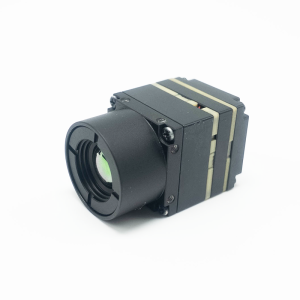
Payload and gimbal systems: These are the weight core of many industrial projects. A truly good lightweight gimbal pod is not just a lighter camera module. It is a unified design covering optics, thermal imaging, ranging, gimbal structure, control board, and housing. The more concentrated the weight and the more reasonable the center of gravity, the lower the flight control burden and the better the image stability.
Propulsion and thermal components: Battery trays, ESC housings, heat sinks, and propeller materials may look like supporting roles, but they directly affect endurance and reliability. Lightweighting must not sacrifice the thermal path. An ESC that is 30 grams lighter but has unstable heat dissipation may ground the whole aircraft during high-temperature operations.
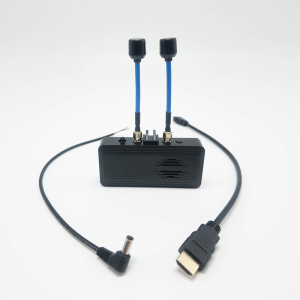
Wiring harnesses, connectors, and fasteners: These “small things” affect both weight and assembly efficiency. Shorter wiring harnesses, more unified interfaces, and fewer fastener specifications bring not only weight reduction, but also a lower installation error rate and faster after-sales response.
4. When Purchasing Lightweight Components, Do Not Look Only at the Specification Sheet
The first thing to ask about is the complete installed weight. A supplier’s stated 280 grams may only be the bare-unit weight. After adding brackets, screws, adapter plates, vibration-damping balls, and wiring harnesses, it may already exceed 400 grams. Before purchasing, be sure to ask clearly whether additional accessories are required. It is best to have the supplier provide installation drawings and an explanation of the center-of-gravity position.
The second thing to review is the test data. Carbon fiber does not necessarily mean high end, and aluminum alloy does not necessarily mean outdated. The key is whether the material, structure, and process match each other. Vibration testing, temperature cycling, drop or impact testing, and long-term load testing are more valuable than a single phrase like “aerospace-grade material.”
The third thing that cannot be ignored is maintainability. Some components are made very light, but must be replaced as a complete set during repair. Some structures seal off all maintenance windows just to save a few screws. For B2B customers, the loss from one day of downtime may be far higher than the value of those few dozen grams.
5. Future Trends: From Point-by-Point Weight Reduction to System-Level Lightweighting
In the next few years, UAV component lightweighting will increasingly look like a systems engineering effort.
In materials, carbon fiber composites, magnesium alloys, engineering plastics, and high-strength aluminum alloys will continue to become more widely used. In processes, 3D printing, CNC thin-wall machining, and integrated injection molding will be used more often for small- and medium-batch customization. In design, suppliers will rely more and more on simulation, center-of-gravity verification, and whole-aircraft matching tests.
I have always believed that a truly valuable UAV component supplier is not one that can only say “our product is lighter.” It is one that can work with customers to calculate these questions clearly: How much lighter is it? Has strength decreased? Has whole-aircraft performance improved after installation? Has maintenance cost gone down? Can batch delivery remain consistent?
When we make UAV components, we are not doing a cold parts business. What we make is the trust behind every stable takeoff. It is a little less anxiety and a little more confidence for customers on sites for power inspection, emergency rescue, agricultural plant protection, and security patrols.
If you are also paying attention to UAV component lightweighting, or are repeatedly weighing payload, endurance, center of gravity, and compatibility, you are welcome to communicate with us through our official website. Those who are willing to carefully refine every gram of weight may go further in the future.
Installed Weight vs Product Weight
UAV component lightweighting is not only about the product weight printed on a specification sheet. Integrators also need to calculate installed weight: the gimbal, camera, bracket, damping plate, cable, connector, fastener and any protection housing required to make the payload reliable in the field. A lightweight component that needs heavy reinforcement may create less value than a slightly heavier but integration-ready design.
| Weight item | What to include | Engineering note |
|---|
| Gimbal and camera | Sensor, motor, housing and stabilization structure. | Review center of gravity, vibration isolation and mounting clearance. |
| Power and signal cable | Cables, connectors, strain relief and shielding. | Long cable runs add weight and may increase interference risk. |
| Mounting hardware | Bracket, damping plate and fasteners. | Installed stiffness affects both flight stability and image quality. |
| Protection margin | Weather sealing, covers or quick-release mechanisms. | Field reliability may be more valuable than saving a few grams. |
For payload planning, compare UAV gimbal modules, thermal imaging modules and total aircraft payload margin together. A procurement review should also include maintenance access, spare parts and the target endurance requirement.
FAQ
Why is installed weight more important than product weight?
Installed weight reflects what the aircraft actually carries after cables, brackets and protection parts are added. It is closer to real flight endurance and payload margin.
Can lightweight drone components reduce reliability?
They can if weight reduction removes needed stiffness, heat dissipation or sealing. The best design saves weight without sacrificing field stability.
What information should integrators provide for a lightweighting review?
Provide the aircraft model, payload weight, mounting interface, target endurance, operating environment and any regulatory or logistics limits.