When Night Is No Longer a Boundary: How UAV Night Vision Cameras Reshape Industry Operational Efficiency
When Night Is No Longer a Boundary: How UAV Night Vision Cameras Reshape Industry Operational Efficiency
Have you ever had such experiences: having to send workers to climb hundreds of meters high iron towers late at night to complete an urgent power inspection; having to arrange multiple security guards to patrol in the dark to monitor a vast industrial park; having to deploy a large number of manpower to search blindly in the pitch-black mountains to rescue a lost person.
For a long time, night has been a “no-go zone” for UAV operations. Ordinary cameras either capture pitchblack images or are full of noise in low-light environments, failing to provide effective image information at all. This not only limits the operating hours of UAVs but also exposes many industries to huge safety risks and efficiency bottlenecks at night.
Today, we will delve into the core technology of UAV night vision cameras and see how they break the boundaries of night and bring revolutionary changes to various industries.
Why Do 90% of Night UAV Operations Fall Short of Expectations?
Many businesses find that the actual performance of UAVs marketed as “night vision-enabled” is far from the publicity. This is not because they have been deceived, but because most people have misunderstandings about “night vision”.
Genuine night operations face three major technical challenges:
First, the challenge of signal capture under extremely low illumination. Under moonlight, the ambient illuminance is only about 0.01 lux, and on moonless nights, it drops to as low as 0.001 lux. In such environments, the photosensitive elements of ordinary CMOS sensors can hardly capture enough photons, leading to extremely low image signal-to-noise ratio and heavy noise.
Second, interference from complex environments. At night, not only is light insufficient, but it is also often accompanied by harsh weather such as fog, rain, and sand dust. These factors further attenuate light, making the imaging quality of ordinary cameras even worse.
Third, low contrast between targets and backgrounds. At night, the difference in visible light reflectivity between many targets and backgrounds is minimal, making them difficult to distinguish with the naked eye. For example, a person wearing dark clothes standing against a black background is almost undetectable by ordinary cameras.
It is these challenges that make most “night vision” UAVs on the market only work in environments with a certain amount of light, and immediately “go blind” once entering complete darkness or complex environments.
Three Main Technical Routes for UAV Night Vision Cameras: No Best, Only Most Suitable
At present, mainstream UAV night vision cameras mainly adopt three technical routes, each with its own advantages and disadvantages, suitable for different scenarios.
1.Low-light CMOS Cameras: Starlight-grade “Eyes”
Low-light CMOS cameras are the most widely used night vision technology at present. By adopting backilluminated (BSI) or stacked structures, they greatly improve the quantum efficiency of the sensor, enabling it to capture clear images under extremely low illumination.
Advantages:
- Small size, light weight, and low power consumption
- Can retain rich image details and color information
- Relatively low cost
Disadvantages:
- Cannot work in complete darkness
- Poor ability to penetrate smoke and sand dust
Applicable scenarios: Urban security, traffic monitoring, night surveying and mapping, and other environments with a certain amount of light.
2.Active Infrared Fill Light Cameras: Built-in “Flashlight”
Active infrared fill light cameras emit invisible infrared rays to the target through built-in infrared LEDs or laser transmitters, and then capture the reflected infrared rays for imaging via sensors.
Advantages:
- Can work in complete darkness
- High imaging clarity with rich details
- Moderate cost
Disadvantages:
- Limited detection distance, usually no more than 100 meters
- Easily interfered by reflective objects such as glass
- May expose its own position
Applicable scenarios: Short-range security monitoring, warehouse inspection, indoor operations, etc.
3.Infrared Thermal Imaging Cameras: Heat-sensing “Thermal Eyes”
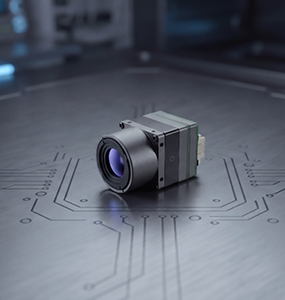
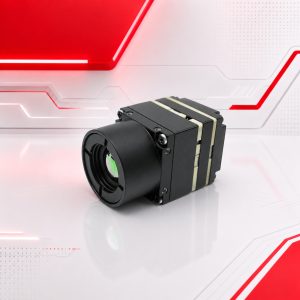
Infrared thermal imaging cameras are the most advanced night vision technology to date. Instead of relying on any external light, they form images by detecting the infrared thermal radiation emitted by objects themselves.
Advantages:
- Can work in harsh environments such as complete darkness, smoke, and sand dust
- Can detect temperature anomalies invisible to the naked eye
- Long detection distance, up to several kilometers
Disadvantages:
- Fewer image details, unable to recognize colors and textures
- High cost
- Cannot penetrate glass and metal
Applicable scenarios: Power inspection, forest fire prevention, emergency rescue, border patrol, etc.
To help you intuitively understand the differences between these three technologies, we have compiled the following comparison table:

From Power to Security: Golden Rules for Selecting NightVision Cameras in Different Industries
Different industries have vastly different demands for night vision cameras. Choosing the right technical route can not only improve operational efficiency but also significantly reduce costs.
Power Industry: Thermal Imaging Is a Must
Power inspection is one of the industries where night vision cameras are most widely used. At night, heating defects in transmission lines become more obvious, and thermal imaging cameras can accurately detect hidden dangers such as loose bolts, overheating conductors, and damaged insulators.
Selection suggestions: Prioritize dual-light pods equipped with uncooled infrared detectors with a resolution of 640×512 or higher, and with integrated visible light and thermal imaging linkage functions. The temperature measurement accuracy should be better than ±2℃, and the NETD (Noise Equivalent Temperature Difference) should be lower than 50mK.
Actual effect: Lines that used to take 3 days for manual inspection can be completed by UAVs in just 2 hours. The inspection cost has dropped from 500 CNY per kilometer to 50 CNY per kilometer, and the risk of highaltitude operations is avoided.
Security Industry: Multi-technology Integration Is the Trend
The security industry has the most complex demands for night vision cameras. In urban environments with a certain amount of light, low-light CMOS cameras can provide clear color images; while in remote areas or completely dark environments, thermal imaging cameras are required.
Selection suggestions: Choose pods with multi-sensor fusion, equipped with low-light CMOS, active infrared fill light, and thermal imaging cameras simultaneously. This allows automatic switching to the most suitable imaging mode in different environments.
Actual effect: Wuhan Public Security deployed thermal imaging UAVs during the cherry blossom season to monitor scenic spot passenger flow in real time. When tourists leaned out of the plank road guardrails, the UAV immediately identified abnormal heat sources through thermal imaging and completed shouting warnings and on-site disposal within 7 minutes.
Agricultural Industry: Thermal Imaging Boosts Precision Agriculture
In the agricultural field, thermal imaging cameras can detect hidden dangers of diseases and pests in advance by analyzing the leaf temperature of crops. They can also be used to monitor soil moisture, livestock health status, etc.
Selection suggestions: Choose UAVs equipped with infrared detectors with a resolution of 320×240 or640×512, and with multispectral imaging functions. This enables simultaneous acquisition of crop temperature and spectral information for more accurate monitoring.
Actual effect: A Shatian pomelo planting base in Rong County, Guangxi used thermal imaging UAVs to detect hidden dangers of diseases and pests 2 weeks in advance by analyzing abnormal leaf temperatures of fruit trees. Pesticide usage was reduced by 50%, and efficiency was improved by 30 times.
Emergency Rescue Industry: Thermal Imaging Is a Lifeline
In emergency rescue, time is life. Thermal imaging cameras can quickly find survivors in complex
environments such as darkness, smoke, and ruins, greatly improving the success rate of rescue operations.
Selection suggestions: Choose lightweight, portable UAVs with long battery life, equipped with high-sensitivity thermal imaging cameras. They should also have GPS positioning and image transmission functions to transmit images back to the command center in real time.
Actual effect: A man was trapped on a beach in Lianyungang City,Jiangsu Province, with deep silt and low visibility at the scene. Rescuers used DJI UAVs for thermal imaging reconnaissance to quickly and accurately locate him, and finally successfully rescued the trapped man.
2026 Purchase Tips: Don’t Be Tricked by Parameter Sheets
When purchasing UAV night vision cameras, many merchants use seemingly impressive parameters to mislead consumers. Here are some of the most common “pitfalls” we have summarized—be sure to avoid them:
Pitfall 1: Focusing only on resolution, ignoring temperature measurement accuracy and imaging algorithms
Many people only pay attention to thermal imaging resolution when purchasing, but ignore temperature measurement accuracy and image processing algorithms. Some low-quality models are labeled with high resolution but have large temperature measurement errors (more than ±5℃) and rough algorithms, resulting in blurry thermal imaging details. Although the parameters look good, they cannot accurately locate fault points in actual operations.
Avoidance suggestion:Ask merchants to provide third-party test reports, focusing on temperature measurement accuracy and NETD indicators.At the same time, be sure to personally test the actual imaging effect instead of just relying on parameter sheets.
Pitfall 2: Blindly pursuing high pixels, ignoring CMOS size and focusing technology
For visible light cameras, higher pixels do not necessarily mean better performance. Some models are labeled with high pixels but use small CMOS sensors and ordinary focusing technology, resulting in noisy images, slow focusing, and blurry shots in low-light environments.
Avoidance suggestion: For the same pixel count, prioritize sensors with larger CMOS sizes.At the same time, pay attention to focusing speed and focusing performance in low-light conditions.
Pitfall 3: Only looking at flight endurance, ignoring actual wind resistance and environmental adaptability
Some models are labeled with long endurance but have weak wind resistance and a narrow operating temperature range. In actual outdoor operations, they cannot fly in slightly strong winds and even “stop working” in winter/summer—no matter how long the endurance is, it is meaningless.
Avoidance suggestion:Ask about the actual operational endurance when carrying the maximum payload you need and facing the rated wind speed, rather than the no-load hovering time. At the same time, confirm whether the overall protection level of the UAV reaches IP54 or above.
Pitfall 4: Blindly trusting “omnidirectional obstacle avoidance”, ignoring sensor fusion technology
Many models claim to have “omnidirectional obstacle avoidance” but are only equipped with a small number of visual sensors without fusion with ultrasonic, IMU, and other sensors. The obstacle avoidance response is slow, the missed judgment rate is high, and collisions are still likely in complex environments.
Avoidance suggestion: Understand the sensor composition and fusion algorithm of the obstacle avoidance system. It is best to conduct actual tests in complex environments to verify the obstacle avoidance effect.
Night Has Its Boundaries, but Technology Knows No Limits
The development of UAV night vision camera technology is breaking the boundaries of night, enabling UAVs to truly achieve all-weather operations. From power inspection to security monitoring, from agricultural monitoring to emergency rescue, it is reshaping the operational methods of one industry after another.
However, we must also clearly recognize that no single technology is omnipotent. Choosing a suitable nightvision camera requires comprehensive consideration of your own industry needs, operating environment, and budget. Only in this way can we truly exert the value of technology, improve operational efficiency, and reduce safety risks.
If you have any questions about the selection or application of UAV night vision cameras, welcome to contact us for communication. We can also provide you with one-on-one technical consulting and customized solution services.
Measuring Night Operation Efficiency
This article should stay focused on industry operational efficiency. UAV night vision cameras improve value when they reduce manual risk, shorten inspection time, increase coverage or help teams respond before a small issue becomes a shutdown. Efficiency claims are strongest when they are described with measurable indicators rather than broad promises.
| Scenario | Efficiency indicator | Recommended payload view |
|---|---|---|
| Power inspection | Lines checked per night, fault confirmation time and climbing risk avoided. | Thermal plus visible-light reference. |
| Security patrol | Area covered, response time and number of manual patrol points reduced. | Low-light, thermal or multi-sensor gimbal. |
| Agriculture | Field area checked, abnormal zones found and follow-up action speed. | Thermal or multispectral workflow depending on crop target. |
| Rescue | Search area covered, detection time and command visibility. | Thermal imaging with reliable video transmission. |
For broader context, connect this article with the low-altitude night vision guide, thermal imaging modules, four-sensor gimbal and solution services.
FAQ
How do UAV night vision cameras improve efficiency?
They extend operating hours, reduce manual inspection risk and help teams detect targets or anomalies faster in low-light conditions.
Which industries benefit most from night vision drones?
Power inspection, security, emergency rescue, fire prevention, agriculture and industrial facility management are common high-value users.
How should efficiency improvement be measured?
Track inspection time, area coverage, response speed, risk reduction, repeat flight rate and the number of actionable issues found.